Revolution, Reaction, Reform
National History Day 2026
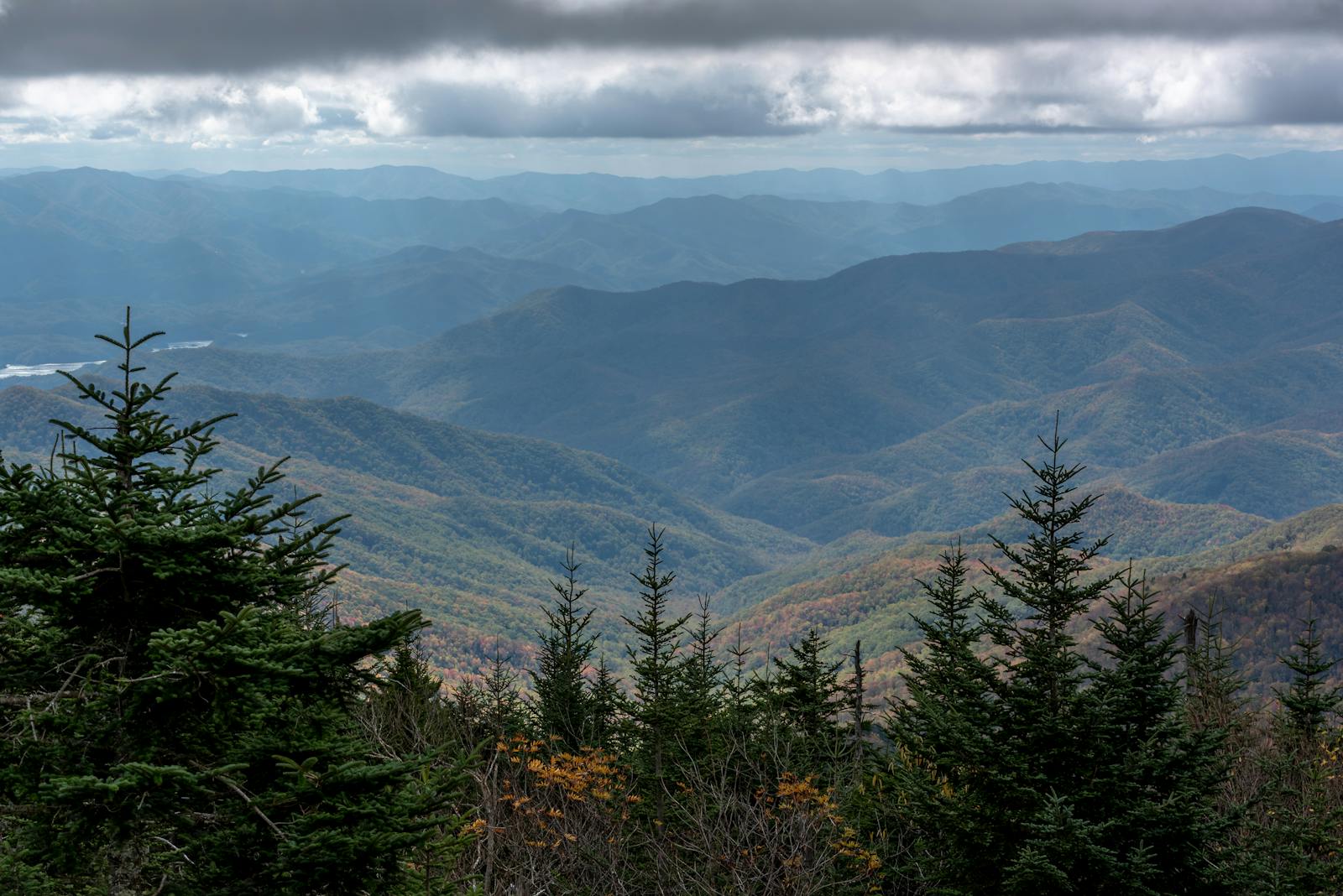
Appalachian Mountains Courtesy of PeakBagger.com
Reaction
One reaction to Prohibition and taxes on alcohol in the Appalachian Mountains was the creation of three new roles: moonshiners, bootleggers, and revenuers.
Moonshiners
“He is called a moonshiner because it is supposed that he engages in his illicit traffic on moonlight nights when there is enough light to make work easy and enough darkness to make him secure.” - J. C. Campbell
Farmers in the Carolinas had been producing alcohol for generations. They believed the government was encroaching on their rights. Their reaction was to conceal their operations and continue distilling, becoming “moonshiners”. They had been doing this for years, and they weren't going to stop now.
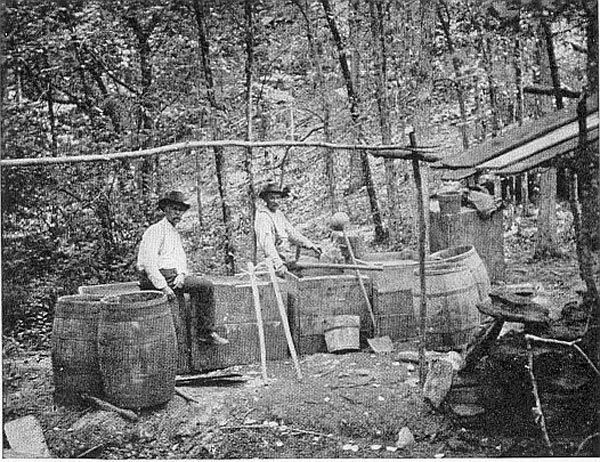
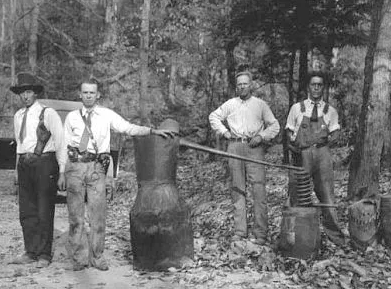
Image of a Still Courtesy of Mike Houd
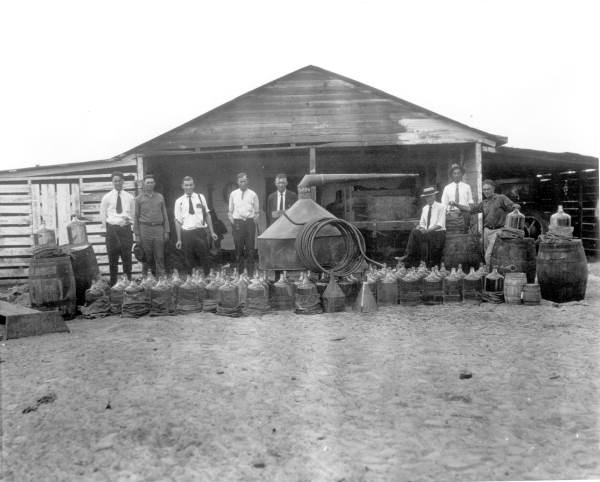
Jugs of Moonshine and Distillery Equipment Courtesy of State Archives of Florida
Even though selling alcohol was illegal, the demand for liquor never disappeared. Since big distilleries couldn't produce alcohol, moonshiners flourished, creating an illegal monopoly.
“Prohibition only drives drunkenness behind doors and into dark places, and does not cure it or even diminish it.”
– Mark Twain
Bootleggers
Bootleggers were important in the selling and transportation of moonshine. Bootleggers carried alcohol across the county, often in a Model-T, and later a Ford V-8. They saw Prohibition as an opportunity to get rich. They carried millions of bottles of illegal alcohol from 1920-1933, fueling the illegal bars, crime rings, and gangs.
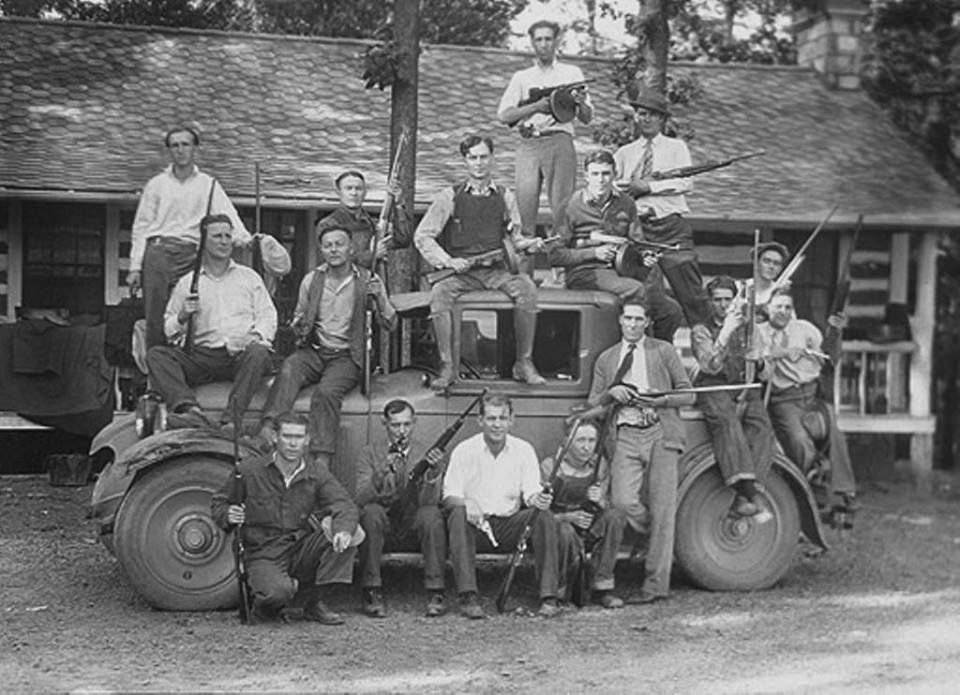
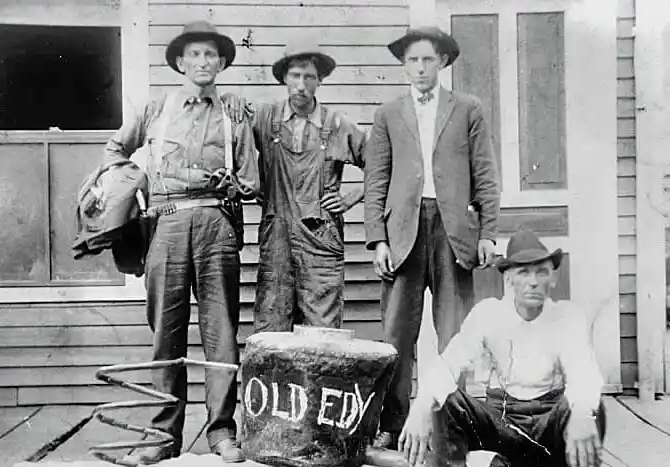
Images of Armed Bootleggers Courtesy of Don Bentley
“When the liquor market was strong, I’d buy a new car, sometimes every six months. Tear ‘em up! They wouldn’t be worth nothin’ when I’d get through with ‘um. Driving around on them rough roads.”
– Hubert Howell, Bootlegger
Revenuers
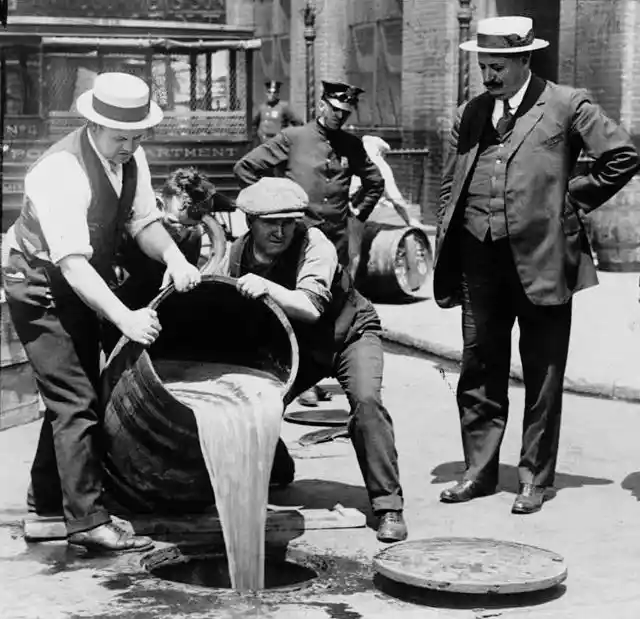
Image of Revenuers Dumping out Moonshine Courtesy of the Saturday Evening Post
Revenuers worked for the Bureau of Internal Revenue; their role was to pursue moonshiners and bootleggers. Initially, with only 1,500 enforcement agents around the country, they poured barrels of seized liquor into the streets as a warning to other violators.
Later, they traveled through the rural mountains of Appalachia, destroying moonshine and stills. During Prohibition, the revenuers destroyed thousands of distilleries and millions of bottles of alcohol.
“The time has come when an honest man can’t take an honest drink without a gang of revenue officers after him.” – Zebulon B. Vance NC Governor
Revenue Officers with a Captured Still Courtesy of Appalachian History
Revenue Officer Chap Osborne and Colleagues Courtesy of Appalachian History
They viewed moonshiners as criminals and tax evaders, breaking the law for their own gain. They vowed to enforce the law.
Moonshiners vs Revenuers
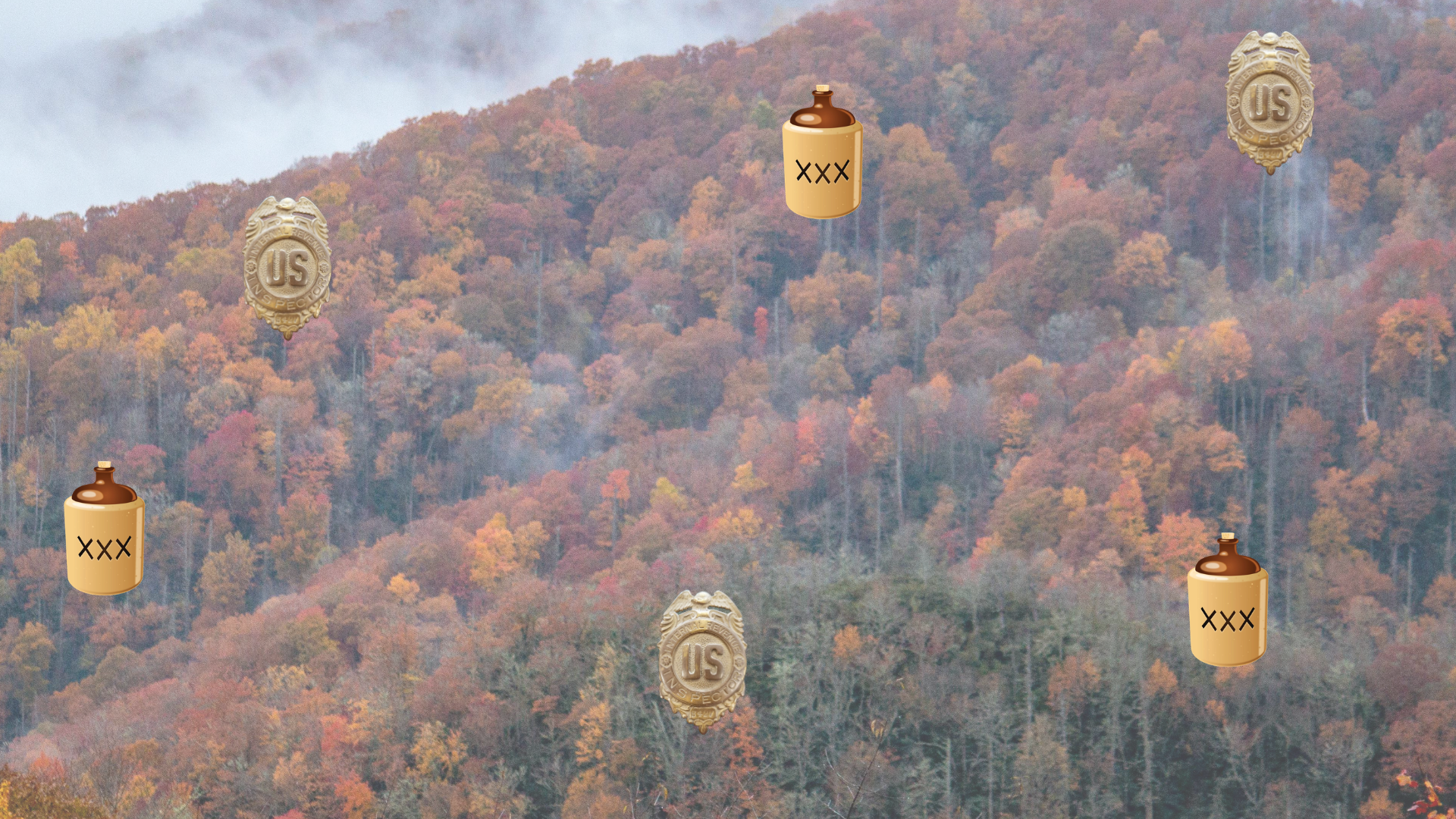
Hover over the jugs to read the moonshiners' perspectives on distilling alcohol. Hover over the badges to read the revenuers' thoughts.
Nolan Adams, Thomas Cripe, Holden Pate, Conrad Sims, and Eli Taylor
Senior Group Website
“Back then liquor was life, if you didn’t have none you starve” - Popcorn Sutton
“That’s the only reason I made whiskey – there wasn’t no jobs.” - Hubert Howell
“We weren’t doing anything wrong, we were just trying to survive and we didn’t have any money to pay the taxes” - Junior Johnson
"A lot of what we saw were just normal people trying to make a living when the state had mostly dry counties." - Johnny Binkley
"Whenever times get tight, people go to making whiskey." - Garland Bunting
“Most of them were good people, churchgoers and the like. If you caught them, you caught them. If you didn’t, you’d wave to them on the street.” - Roy Stancil